

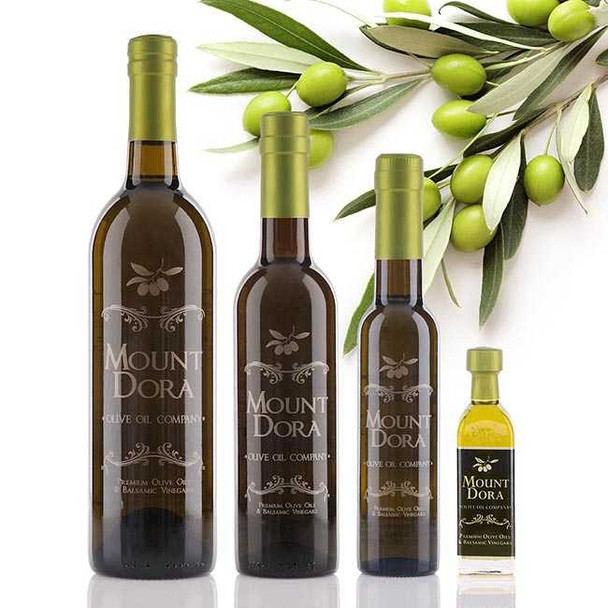
Description
Crush Date: November 2025
High polyphenol score. Our supplier, Veronica, measures phenolic content using the most conservative HPLC method, rather than the lenient NMR method. If you are interested, there is more information at the bottom of the page.
Our extraordinarily intense Organic Chetoui displays a spectacularly aromatic nose with bitter notes of dandelion greens and sweet berry on the finish.
*Biophenols: 733.3 ppm FFA: 0.21
Oleic Acid: 65.24 Peroxide: 6.09
DAGs: 94.1 *PPP: <0.6
Squalene: 4,023.80 A-Tocopherols: 446.6
Country of Origin: Tunisia *As measured at the time of crush
Veronica Foods relies on High-Performance Liquid Chromatography (HPLC)—often with diode-array detection (DAD) or coupled with mass spectrometry—for quantifying polyphenols. They use accredited third-party labs (such as Modern Olives in Australia) that follow methods aligned with International Olive Council (IOC) standards.
• Why it’s considered “conservative”: HPLC physically separates and identifies specific individual phenolic compounds (e.g., hydroxytyrosol, tyrosol, oleocanthal, oleuropein aglycone derivatives, lignans like pinoresinol, and flavonoids). It provides a precise, targeted total that focuses on the key bioactive polyphenols. This avoids overcounting and gives more reliable, lower (but accurate) numbers. It’s the gold standard for regulatory health claims (like the EU’s olive oil polyphenol claim) and authenticity testing because it’s highly specific and reproducible.
Typical reported values from Veronica Foods’ oils (via HPLC) often fall in the 300–700+ mg/kg range for high-polyphenol batches, with breakdowns of individual compounds provided on their labels or reports.
Comparison to More Lenient Lab Test Methods
Other common methods can be more “lenient” (i.e., they tend to report higher numbers, sometimes 1.5–3x greater for the same oil) because they’re less specific:
• qNMR (Quantitative Nuclear Magnetic Resonance) or NMR: This is faster and non-destructive but casts a wider net. It detects a broader range of phenolic signals, which can lead to overestimation due to overlapping peaks and inclusion of non-target compounds. Many producers using NMR report totals that are significantly higher than HPLC results on the same oil (e.g., an oil at ~650 mg/kg HPLC might read ~1,200+ mg/kg by NMR). Some in the industry note NMR as “less accurate” for precise polyphenol quantification in complex matrices like olive oil.
• Folin-Ciocalteu (colorimetric/spectrophotometric assay): This is the simplest and most lenient. It measures total reducing capacity (not specific polyphenols), so it reacts with many other substances in the oil and often overestimates polyphenols substantially. It’s quick/cheap but not ideal for EVOO claims or comparisons.
In short: If an olive oil label boasts extremely high polyphenol counts (e.g., 1,000+ mg/kg), it’s often using NMR or another broad method. Veronica Foods sticks with HPLC for transparency and accuracy, which is why their numbers appear more “conservative” by comparison. This distinction comes up frequently in olive oil retailer discussions and quality debates.
Details
High Polyphenol Score: |
(see information at the bottom of the page) |
Tasting notes: |
Our extraordinarily intense Organic Chetoui displays a spectacularly aromatic nose with bitter notes of dandelion greens and sweet berry on the finish. |
Organoleptic Taste Panel Assessment: |
FRUITINESS:4.8 BITTERNESS:4.3 PUNGENCY:3.8 |
Chemistry: |
*Biophenols: 733.3 ppm FFA: 0.21 Oleic Acid: 65.24 Peroxide: 6.09 DAGs: 94.1 *PPP: <0.6 Squalene: 4,023.80 A-Tocopherols: 446.6 |
Smoke Point: |
379 F |
Crushed: |
November 2025 |
Product Reviews
-
Tunisian Chetoui
Good flavor
